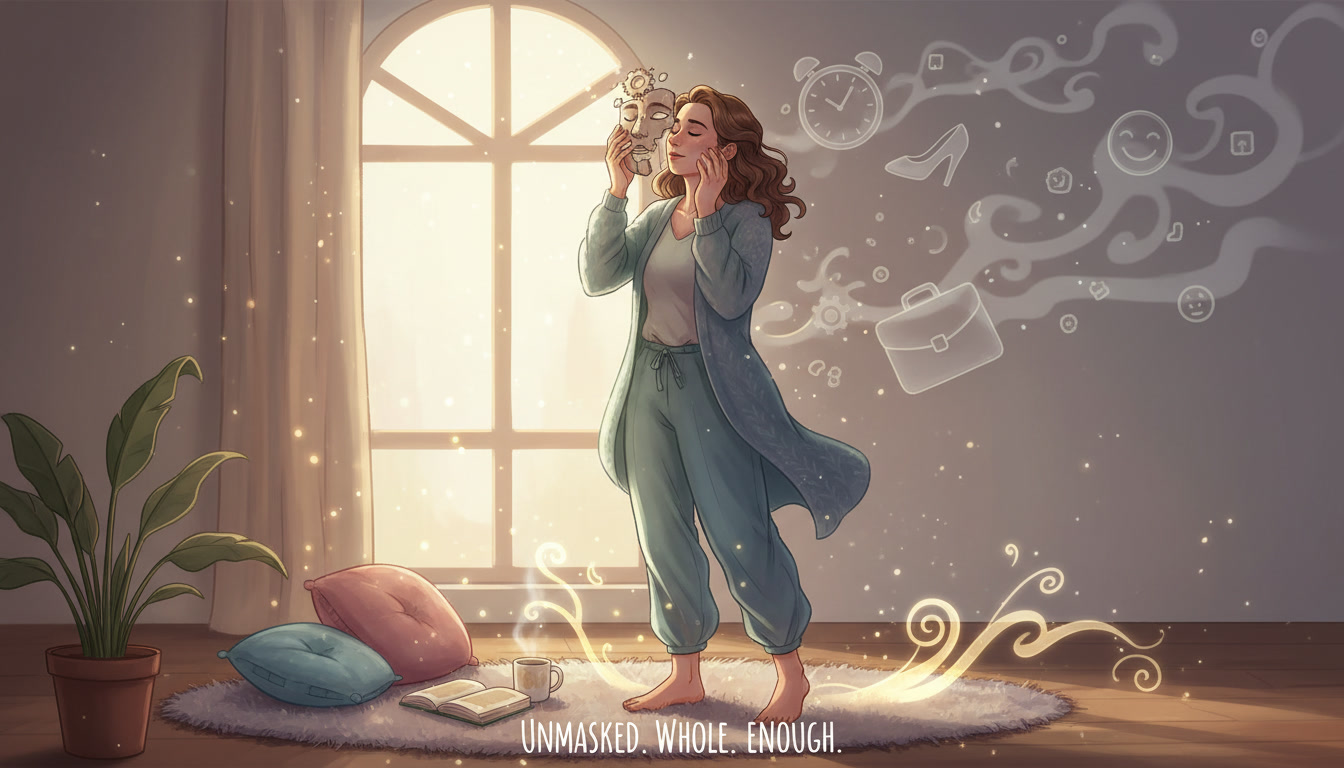
Autistic burnout affects people of all genders—but women and AFAB (assigned female at birth) individuals are especially likely to be overlooked, misdiagnosed, or misunderstood. Many spend years pushing themselves to meet expectations, masking their needs, and internalizing distress, only to collapse later into profound burnout.
In Embracing Self-Care for Autistic Burnout: Your comprehensive resource for managing autistic burnout, we explore how gendered expectations and late diagnosis contribute to severe, long-lasting burnout in women and AFAB autistic adults.
Why Burnout Is Missed in Women and AFAB Autistic Adults
Several systemic factors contribute to this invisibility:
- Social conditioning to mask emotions, discomfort, and sensory distress
- People-pleasing expectations that reward compliance over self-care
- Internalized stress rather than outward meltdowns
- Stereotypes of autism based on male-presenting traits
- Late or missed diagnosis, often well into adulthood
As a result, burnout is frequently mislabeled as anxiety, depression, perfectionism, or “coping poorly.”
How Burnout May Present Differently
Women and AFAB autistic individuals may experience burnout as:
- Chronic exhaustion without obvious external stressors
- Loss of motivation and identity
- Emotional shutdown rather than outward meltdowns
- Increased people-pleasing despite worsening health
- Physical symptoms such as headaches, gut issues, or pain
- Sudden inability to “keep up” with life despite past success
Because these signs are quieter, they’re often dismissed—by professionals and even by the individuals themselves.
The Cost of Late Recognition
When burnout goes unrecognized, it can lead to:
- Years of pushing past limits
- Severe loss of functioning
- Long recovery timelines
- Deep guilt and self-blame
- Fear of “never being capable again”
“I spent years being told I was anxious or sensitive. Discovering autistic burnout finally explained everything.” – Reader review
Steps Toward Recognition and Recovery
- Name the experience – Understanding autistic burnout can be profoundly validating.
- Question internalized expectations – You don’t have to meet standards that harm you.
- Seek autism-informed professionals – Look for clinicians familiar with adult and female-presenting autism.
- Create low-demand environments – Especially in social and caregiving roles.
- Reclaim authenticity – Reducing masking is essential for long-term healing.
You Are Not “Too Much” or “Not Enough”
Burnout in women and AFAB autistic adults isn’t a personal failure—it’s the result of surviving in systems that demand too much while offering too little support. Recognition is the first step toward recovery, self-trust, and sustainability.
For personal stories, validation, and practical recovery strategies, explore Embracing Self-Care for Autistic Burnout.