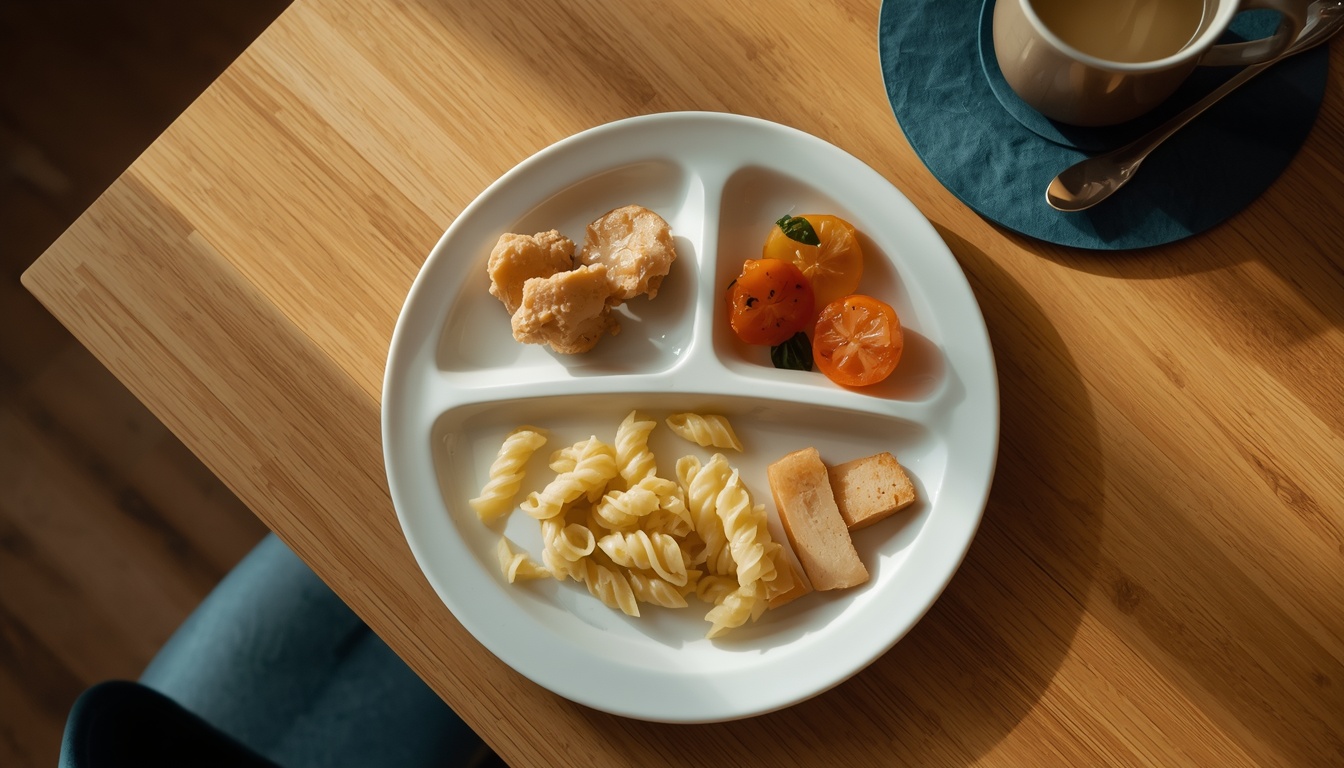
“Just one bite” is probably the single most repeated, least effective phrase in the history of family mealtimes involving an autistic child. It’s not a discipline problem being solved with the wrong tool. For many autistic children, food refusal isn’t about willpower at all — it’s a sensory system reacting to genuinely overwhelming input, the same way some people gag reflexively at a smell others don’t even notice.
Texture is often the real issue, not flavor
A child who rejects mashed potato but happily eats crisps isn’t being inconsistent about potato as a flavor — texture and flavor are processed somewhat separately, and for many autistic children, texture carries far more weight in determining whether a food feels tolerable or genuinely distressing. Mixed textures within a single bite — a casserole with both soft and crunchy elements, for instance — are frequently harder to tolerate than either texture eaten separately, because the mouth has to process an unpredictable combination rather than a consistent one.
Smell can disqualify a food before it’s even tasted
Heightened sensitivity to smell means some foods are rejected at the sniff stage, well before a single bite happens. This isn’t theatrical refusal. A smell that registers as mild to most people can register as overwhelming to a more sensitive olfactory system, the same category of difference that makes a perfume aisle unbearable for some autistic adults. Steam, in particular, can carry smell more intensely, which is part of why some children resist hot food specifically.
The visual matters more than adults usually expect
A food that looks slightly different from how it usually looks — a different shade of orange in carrots from one batch to the next, a slightly different shape of pasta — can trigger genuine refusal, because the visual mismatch breaks the predictability a child was relying on. This isn’t about aesthetics or fussiness in the way adults usually mean it; it’s closer to the visual confirming or denying whether this is actually the safe, known food it’s supposed to be.
“Safe foods” are doing real work, not avoidance
A narrow rotation of reliably accepted foods — plain pasta, a specific brand of crackers, one type of fruit — often gets framed by worried adults as a problem to fix quickly. It’s worth reframing: safe foods are providing genuine nutritional stability during a period when the rest of the sensory world already feels unpredictable. Removing access to safe foods in an attempt to force variety almost always backfires, increasing anxiety around eating generally rather than expanding the range of accepted foods.
Expanding the range works better sideways than head-on
Forcing new foods directly tends to entrench refusal further. A gentler, more effective approach introduces new foods alongside safe ones without pressure to actually eat them — placed on the same plate, touched, smelled, or simply present in the room repeatedly over many exposures, with zero expectation of eating attached to any single instance. Familiarity through repeated low-stakes exposure, sometimes over weeks or months, tends to outperform any single dramatic mealtime negotiation.
When to bring in a professional
If a child’s accepted food range is narrow enough to raise genuine nutritional concerns, or mealtimes have become a source of intense daily distress for the whole family, a feeding therapist or occupational therapist with sensory feeding experience can offer structured, individualized strategies well beyond general advice. This is a legitimate, fairly common referral, not an extreme step, and many families find even a handful of sessions shifts the daily dynamic considerably.
For more on the broader sensory environment shaping daily comfort, including at mealtimes, see our piece on building a sensory-friendly bedroom, which covers similar trial-and-observe thinking applied to a different room in the house. And if anxiety more broadly is tangled up with mealtime resistance, our piece on the neuroscience of autistic anxiety goes deeper into why “just relax” advice rarely helps.
Laura Mitchell’s upcoming book Understanding Your Autistic Child covers sensory profiles and food-related sensory triggers in detail. Her existing title Embracing Self-Care for Autistic Burnout includes a chapter on safe foods and comfort eating in adulthood that traces this same pattern forward.