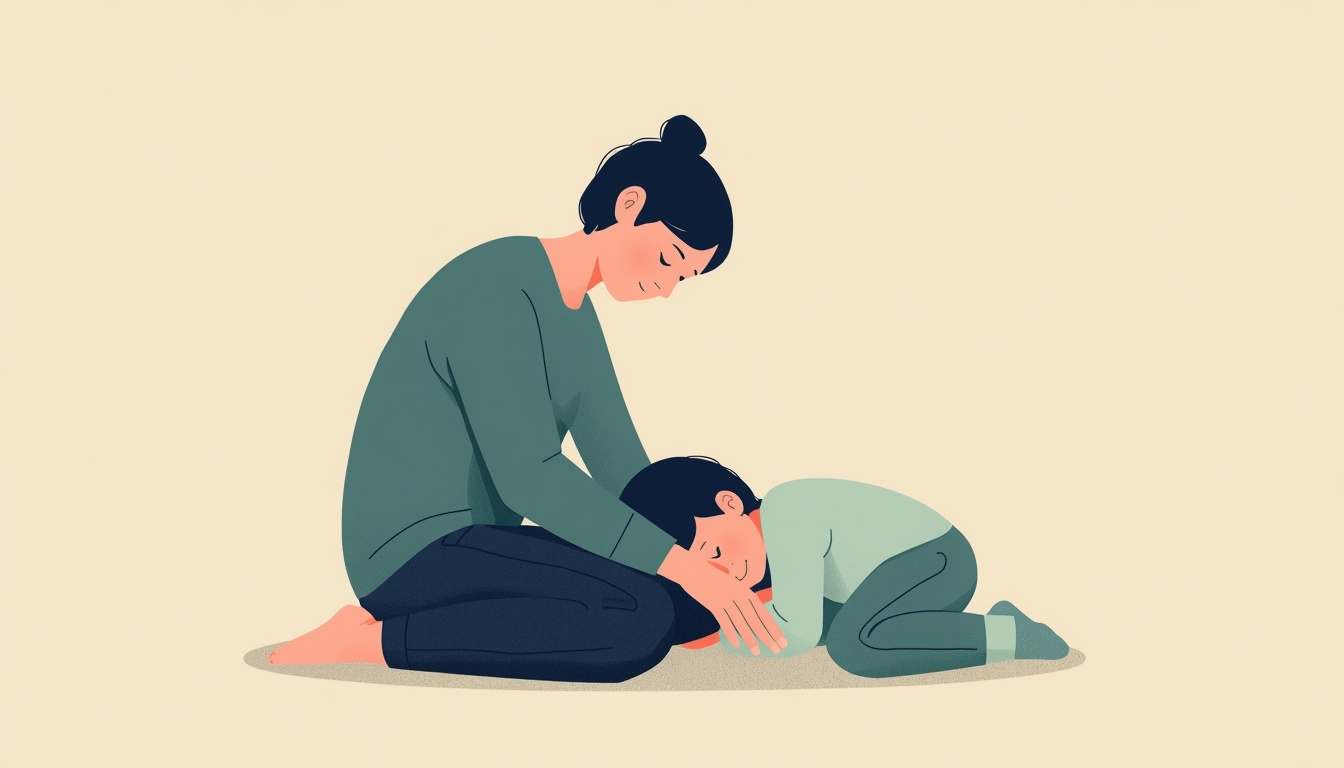
“He needs to learn to calm himself down” is advice I’ve heard given to parents of children as young as three, usually by someone suggesting the child be left alone in a room until they manage it independently. It’s advice built on a misunderstanding of how regulation actually develops, and it usually makes things considerably worse before it makes anything better.
Regulation is borrowed before it’s built
No human being, autistic or not, is born knowing how to calm an overwhelmed nervous system alone. Infants regulate entirely through a caregiver — being held, rocked, soothed by a calm voice. That external regulation, provided consistently over years, is what gradually gets internalized into a person’s own ability to self-soothe. Skip the borrowing stage, and the building stage doesn’t simply happen on its own out of necessity. It tends to stall, or it gets replaced by less healthy coping strategies that develop in the gap.
This matters even more for autistic children, many of whom have a nervous system that registers everyday input — sound, light, social demand, unpredictability — more intensely than a non-autistic child’s would. A system working harder at baseline needs more external regulation support, not less, to eventually build reliable internal tools.
Your own state matters more than your words
A child in genuine overload is not, in that moment, processing your carefully chosen sentences about calming down. They’re picking up your nervous system state directly — your tone, your breathing, your tension — far more than your vocabulary. A parent who’s visibly frustrated or anxious while trying to verbally talk a child through a meltdown is sending a mismatched signal: calming words from a body that isn’t calm. Genuinely lowering your own physical tension first — slower breathing, softer shoulders, a quieter voice — does more actual co-regulating work than any specific phrase.
Presence without demands
Co-regulation doesn’t require talking at all during the hardest moments. Sometimes the most useful thing is simply staying physically near, without asking questions, without trying to extract an explanation, without requiring eye contact or a verbal response. “I’m right here” repeated calmly, without follow-up questions, communicates safety without adding any cognitive demand to a system that’s already maxed out.
Build the toolkit during calm moments, not crisis moments
Trying to teach a brand-new calming strategy in the middle of a meltdown rarely works, because learning capacity drops sharply during overload. The actual teaching happens during calm windows — practicing a breathing pattern together as a game, identifying what a rising feeling feels like in the body before it peaks, naming sensory preferences while things are quiet. These calm-moment conversations build the vocabulary and body awareness that eventually get drawn on, with your help, during harder moments.
Self-regulation is the eventual goal, not the starting expectation
Over months and years of consistent co-regulation, most children gradually start using pieces of the toolkit independently — reaching for a fidget tool without being prompted, asking for a break before reaching full overload, using a breathing pattern on their own. This shift happens at a different pace for every child, and it isn’t accelerated by withdrawing support earlier. If anything, premature withdrawal tends to slow it down, because the nervous system hasn’t yet had enough repeated practice with feeling safely supported through difficulty.
This applies to adults too
It’s worth saying plainly: this isn’t a child-specific concept that autistic adults somehow age out of needing. Many autistic adults describe co-regulation with a trusted partner, friend, or therapist as genuinely useful well into adulthood, and there’s nothing developmentally behind about that. The expectation that everyone eventually regulates entirely alone, with zero ongoing support from anyone, isn’t really how most humans function — autistic or not.
For more on what’s actually happening underneath a meltdown that co-regulation is responding to, see our piece on meltdowns versus tantrums. And for the bigger-picture question of why generic calming advice often misses the mark entirely, our piece on the real neuroscience of autistic anxiety goes deeper into the biology behind it.
Laura Mitchell’s upcoming book Understanding Your Autistic Child covers co-regulation strategies in depth as part of its chapter on meltdowns and emotional regulation. Her existing title Embracing Self-Care for Autistic Burnout extends these same regulation principles into adult self-care practice.