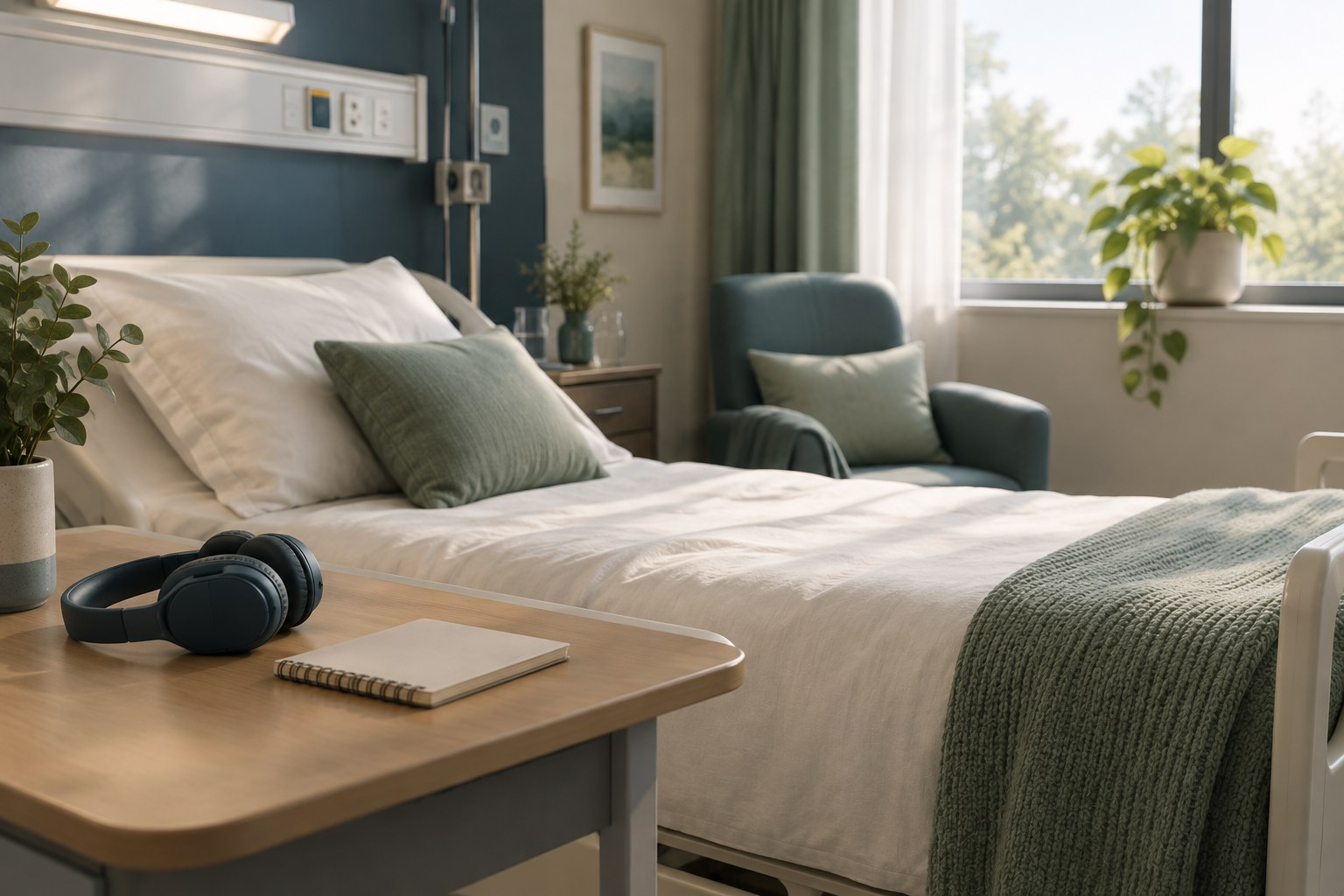
The appointment letter says 7:30am. Arrive fasting. Bring a list of your medications. It says nothing about the strip lights, the shared bay, the machine that beeps every forty seconds, or the six different people who will ask you the same questions in slightly different words.
For a lot of autistic adults, that gap is the whole problem. Hospitals are built around a patient who can wait in noise, answer questions on the spot, read a clinician’s tone and speak up when something feels wrong. Many of us can do some of that on a good day. Very few of us can do all of it while in pain, hungry and frightened.
And the stakes rise with age. Midlife and later life bring more scans, more procedures and more overnight stays. If every medical visit costs you days of recovery, you start putting them off. That is where the real danger sits.
The barriers are real, and they are measurable
This isn’t a vague feeling. A 2022 study published in BMJ Open surveyed 507 autistic adults and 157 non-autistic adults about getting healthcare. Doherty and colleagues found that 80% of autistic respondents had difficulty visiting a GP, compared with 37% of non-autistic respondents. More than half said the waiting room environment was a barrier. And 56% said they didn’t feel understood.
The consequences were serious. Around two-thirds of autistic respondents reported an untreated physical health condition, and about a third said they had not accessed treatment for a potentially life-threatening condition.
Read that again with a hospital in mind. If a GP surgery is hard, a ward is harder. The answer isn’t to try harder to cope. It’s to change the conditions, and you are allowed to ask for that.
Adjustments are a right, not a favour
In the UK, the Equality Act 2010 places a duty on health services to make reasonable adjustments for disabled people, and autistic people will usually meet the Act’s definition of disability. NHS England has built a Reasonable Adjustment Flag, a national record that tells staff across services what a patient needs. It is usually added by your GP, and it should be agreed with you.
Other countries use different routes to the same principle. In Australia, the Disability Discrimination Act 1992 applies to health services. In the US, the Americans with Disabilities Act covers hospitals. Across the EU, national equality laws sit alongside the UN Convention on the Rights of Persons with Disabilities, which every EU member state has ratified. The paperwork varies. The principle doesn’t: a hospital should adapt how it delivers care so you can actually receive it.
Knowing this changes the tone of the conversation. “Could I possibly…” becomes “I need this adjustment so I can take part in my care.”
Write it down before you need it
The single most useful thing you can do is prepare a document while you’re calm, not while you’re on a trolley in A&E.
In England, this is often called a health and care passport. NHS England’s guidance is clear that the passport belongs to you: you decide what goes in it and who sees it. Many NHS trusts publish autism-specific templates you can download.
Outside the UK, the free AASPIRE Healthcare Toolkit is excellent. It was co-created with autistic adults and includes a tool that builds a personalised accommodations report you can print and hand to staff.
Whatever format you use, keep it to one or two pages. Staff skim. Put the most important things first:
- How you communicate best. “I process spoken information slowly. Please give me time to answer, or write key points down.” “I may lose speech when overloaded. I can type on my phone.”
- What overwhelms you. Bright light, alarms, being touched without warning, busy corridors, strong smells.
- What overload looks like in you. Going quiet, repeating questions, rocking, becoming abrupt. Staff sometimes misread shutdown as confusion or non-compliance, and older autistic adults can be wrongly assumed to be cognitively impaired.
- How you show pain. If your face doesn’t match your pain level, say so plainly. “I may look calm when I’m in severe pain. Please ask me to rate it with numbers.”
- What helps. Headphones, a side room if one is free, a named nurse, being told before every touch, a quiet space to wait.
- Who to contact. Someone who knows you well and can advocate if you can’t.
Adjustments worth asking for
Most helpful changes cost a hospital almost nothing. Ask when you book, again at admission, and again if staff change shifts.
- The first appointment of the day, or the last, when waiting rooms are quieter.
- Waiting somewhere other than the main waiting area, including your car, with a phone call when it’s your turn.
- A side room, or a bed at the end of a bay rather than by the nurses’ station.
- Written instructions for anything important: medication changes, fasting times, discharge plans.
- Consistent staff where possible, and names written on the whiteboard.
- Permission to keep your own headphones, sunglasses, fidget items or safe foods.
- A clear explanation of each procedure before it starts, including how long it will take and what it will feel like.
You won’t always get all of it. Wards are stretched. But asking in writing, and asking early, raises the odds a great deal.
Bring a second brain
If you can, take someone with you. Not to speak over you, but to hold the details: to write down what the consultant said, to notice when you’re going quiet, to ask the follow-up question you’ll only think of at 3am.
If you don’t have a person, bring a notebook or use your phone’s voice memo, and tell staff you’re doing so. Ask for a copy of your discharge letter before you leave. In many countries you have a right to see your own records.
Plan for the recovery after the recovery
Here’s the part no discharge leaflet covers. Even a straightforward hospital stay can leave an autistic person depleted for days or weeks after the medical issue has resolved. You’ve spent that time masking, absorbing noise, and managing unpredictability with no retreat.
Build that in. Clear your diary for longer than the doctors suggest. Stock your safe foods before you go. Tell the people around you that “home” doesn’t mean “back to normal”. If you notice warning signs of burnout in the weeks that follow, treat them as part of the recovery, not a separate failure.
If you’re sorting out wider health, legal and financial arrangements as you get older, our guide to practical planning for autistic midlifers is a good companion to this piece. A health passport slots neatly into that bigger plan.
The takeaway
You shouldn’t have to be a perfect patient to get good care. The system is supposed to meet you partway, and in most countries the law says so. Your part is smaller than it feels: know what you need, write it down, and ask early. Then let the hospital do its share.
Keep reading
Healthcare, sensory change, relationships and planning for later life all get practical, detailed treatment in Laura Mitchell’s Aging & Autism: Thriving in Mid Life and Beyond. It’s written for autistic adults who want the second half of life to fit them better than the first.
This article is general information, not medical advice. Speak to your own healthcare team about your specific needs.